.png)

.png)
Creating an Accessible Website for Mornington Peninsula Accommodation Providers

The Mornington Peninsula attracts a diverse range of visitors, including families, seniors, and people with different abilities. According to the Australian Bureau of Statistics, about 18% of Australians live with some form of disability. This means a significant portion of potential guests may face challenges when navigating websites that are not designed with accessibility in mind.
An accessible website:
Expands your audience by welcoming guests with different needs.
Improves user experience for everyone, including those using mobile devices or older technology.
Builds trust and reputation by showing your commitment to inclusivity.
Reduces legal risks by complying with accessibility standards such as the Web Content Accessibility Guidelines (WCAG).
Boosts search engine ranking since accessible sites often perform better in SEO.
By focusing on accessibility, accommodation providers can create a seamless booking experience that encourages more visitors to choose their property and create a welcoming space for guests to engage with your brand.

User-Friendly Navigation for Mornington Peninsula Accommodation Providers
Navigation is the backbone of any website, serving as the critical framework that guides users through the digital landscape. If visitors struggle to find what they need, they will leave quickly, often without engaging further with the content or services offered. A well-structured navigation system not only enhances user experience but also significantly contributes to the overall success of a website, particularly for accommodation providers in the picturesque Mornington Peninsula.
For accessibility, navigation must be simple, consistent, and easy to use with various assistive technologies like screen readers or keyboard-only controls, ensuring that all potential guests, regardless of their abilities, can easily access information and services.
Key Features of Accessible Navigation
Clear menus and headings that describe sections and content are essential for effective navigation. Each menu item should be labeled in a way that accurately reflects the content it links to, helping users quickly identify where they need to go. For instance, headings such as 'Accommodations', 'Activities', and 'Contact Us' provide immediate clarity about the information contained within each section.
Logical tab order is crucial for users who rely on keyboard navigation. This means that as they press the 'Tab' key, they should move through links and buttons in a predictable sequence that follows the visual layout of the page. A logical order helps prevent frustration and confusion, allowing users to focus on finding the information they need without unnecessary obstacles.
Skip navigation links are an invaluable feature that allows users to bypass repetitive menus and jump directly to the main content of the page. This is particularly useful for those using screen readers or keyboard navigation, as it saves time and enhances the overall efficiency of their browsing experience. For example, a 'Skip to main content' link at the top of the page can lead users directly to the most relevant information without having to navigate through the entire menu structure.
Visible focus indicators are essential for users navigating with a keyboard. When a user selects an element, such as a link or button, a clear visual indication (like a highlighted border or change in color) should appear, showing which element is currently focused. This feedback is crucial for users with visual impairments, as it allows them to track their position on the page and navigate confidently.
Avoidance of dropdown menus that require hover actions is recommended, as these can be particularly challenging for users with certain disabilities. Instead, consider using clickable menus that expand on click or tap, ensuring that all users can access sub-menu items easily without the need for precise cursor movements that may not be feasible for everyone.
Imagine a visitor with limited mobility who uses a keyboard to navigate your website. If your website has a clear tab order and visible focus indicators, they can easily move from the homepage to the booking page without confusion. This smooth experience increases the chance they will complete a reservation, thereby boosting your accommodation's booking rates.
Furthermore, by implementing these accessible navigation features, you not only comply with web accessibility standards but also demonstrate a commitment to inclusivity and customer satisfaction. In a competitive market like the Mornington Peninsula, where many providers vie for attention, an accessible and user-friendly website can set your establishment apart, attracting a broader audience and fostering loyalty among guests who appreciate a seamless online experience.

Clear Information on Accessibility Options
Guests who have varying levels of ability are increasingly seeking accommodations that cater to their specific needs. Therefore, it is crucial for your establishment to clearly communicate the accessibility features that are available before potential guests make their booking decisions.
A well-organised website that offers comprehensive, easily accessible information about these options can significantly enhance the experience for all visitors, ensuring that everyone feels welcome and informed.
Providing this information not only aids in the decision-making process for guests but also demonstrates your commitment to inclusivity and customer service. When potential guests can easily find details about accessibility options, they are more likely to feel confident in their choice of accommodation, leading to higher satisfaction and positive reviews.
What to Include
Descriptions of accessible rooms should be thorough and specific. Include details such as the width of doors, the layout of the room, and the features of the bathroom, such as grab bars, roll-in showers, and adjustable showerheads. Additionally, mention the availability of mobility aids, like shower chairs or bedside grab bars, to provide a complete picture of what guests can expect.
Information on parking, ramps, lifts, and other facilities is essential. Clearly outline the location of accessible parking spaces, the proximity of these spaces to the entrance, and the availability of ramps or elevators. If there are any additional facilities, such as accessible pathways or seating areas, be sure to highlight these features as they contribute to the overall accessibility of your property.
Photos showing accessibility features can greatly enhance understanding. Visual aids provide a realistic view of what guests can expect when they arrive. Include images of accessible rooms, bathrooms, and common areas, ensuring that they showcase the specific features that make your accommodation suitable for guests with disabilities.
Contact details for accessibility inquiries should be prominently displayed. Offer a dedicated phone number or email address where guests can reach out with specific questions or concerns regarding accessibility. This personal touch not only helps potential guests feel valued but also allows you to address any unique needs they may have, paving the way for a more tailored experience.
For instance, a visitor who uses a wheelchair may feel uncertain about booking if they cannot easily find clear information about accessible entrances, bathroom facilities, or the layout of the accommodation. By providing detailed descriptions, comprehensive information, and high-quality photos, you can reassure them that your property is equipped to meet their needs. This transparency not only boosts their confidence in booking but also fosters a sense of trust and comfort, ultimately leading to a higher likelihood of securing their reservation.

Mobile Responsiveness
A mobile-responsive website is crucial for effectively reaching potential guests who are browsing and booking accommodations while on the move, whether they are commuting, traveling, or simply enjoying a day out.
As consumers increasingly rely on their mobile devices for various online activities, including travel planning and bookings, businesses must ensure that their websites cater to this trend. A seamless mobile experience can greatly enhance user satisfaction and increase the likelihood of conversions, as users are more inclined to make reservations when they encounter a site that is easy to navigate and visually appealing on their devices.
What Makes a Site Mobile Responsive?
When discussing mobile responsiveness, several key features contribute to creating an optimal user experience on mobile devices. These elements work together to ensure that visitors can easily access and interact with the website, regardless of the device they are using.
Flexible layouts that adjust to different screen sizes are fundamental to mobile responsiveness. This means that the website's design should automatically adapt to varying dimensions, whether the user is on a smartphone with a small screen or a tablet with a larger display. This flexibility ensures that content is presented in a user-friendly manner, without the need for excessive scrolling or zooming.
Readable text without zooming is another critical aspect. Text should be sized appropriately so that it is legible on smaller screens without requiring users to pinch to zoom. This enhances readability and allows users to consume information quickly and efficiently, which is especially important for those who may be in a hurry.
Buttons and links large enough to tap easily are essential for ensuring that users can navigate the site without frustration. Touch targets must be adequately sized and spaced to prevent accidental clicks, which can lead to a poor user experience. This consideration is particularly important for mobile users who rely on their fingers to interact with the screen.
Fast loading times are crucial to retaining visitors. A website that loads slowly can lead to frustration and abandonment, particularly for mobile users who may have limited patience when browsing on the go. Optimising images, minimising code, and leveraging caching techniques can help improve loading speeds, ultimately enhancing user satisfaction and engagement.
Accessible forms that are easy to fill out on small screens are vital for encouraging user interaction. Forms should be designed with mobile users in mind, featuring large input fields, clear labels, and straightforward navigation. Simplifying the form-filling process can lead to higher completion rates, especially for bookings and inquiries.
Consider the scenario of a visitor searching for last-minute accommodation while traveling. In such cases, they are likely to rely heavily on their mobile device to quickly find and book a place to stay.
If your website loads quickly, displays booking options clearly, and provides an intuitive interface tailored for mobile use, these factors significantly increase the likelihood that they will complete their reservation immediately. Providing a seamless mobile experience can be the differentiator that converts casual browsers into satisfied customers.
Compliance with Accessibility Standards
Following established guidelines like WCAG 2.1 helps ensure your website meets the needs of users with different abilities and needs. These standards cover a wide range of accessibility aspects, from text alternatives for images to color contrast and keyboard navigation.
Benefits of Compliance
Legal protection by meeting Australian Disability Discrimination Act requirements.
Improved usability for all visitors.
Better search engine visibility.
Positive brand image as an inclusive business.
How to Achieve Compliance
Use alt text for all images to describe visual content.
Ensure sufficient contrast between text and background.
Provide captions or transcripts for audio and video content.
Test your site with screen readers and keyboard navigation.
Regularly update and audit your website for accessibility issues.
A property that includes alt text for images and captions for videos allows visitors with visual or hearing impairments to understand the content fully. This attention to detail can set your accommodation apart from competitors.

How Accessibility Enhances User Experience and Attracts More Guests
An accessible site allows users of varying abilities to navigate seamlessly, find the information they need, and engage with your content without frustration. When users perceive your website as easy to navigate, informative, and responsive, their trust in your business increases significantly. This trust often translates into positive recommendations, making it more likely that visitors will share their experiences with friends, family, and colleagues, further amplifying your reach.
Practical Benefits
The advantages of implementing accessibility features on your website extend beyond mere compliance; they have tangible impacts on your business's bottom line. Here are several key benefits:
Higher conversion rates: An accessible website can lead to significantly higher conversion rates, as a greater number of visitors are able to complete bookings. When potential guests can easily find relevant information and complete their transactions without encountering barriers, they are more likely to finalise their reservations.
Positive reviews: Guests who appreciate your commitment to inclusivity are more likely to leave positive reviews. These reviews not only enhance your online reputation but also serve as powerful endorsements of your brand, attracting new guests who value accessibility.
Word-of-mouth referrals: Communities of people with disabilities often share recommendations among themselves. By creating an accessible website, you tap into this network, fostering word-of-mouth referrals that can lead to increased bookings. This organic growth is invaluable, as it comes from trusted sources within the community.
Increased repeat bookings: When guests have a positive first experience due to your website’s accessibility features, they are more likely to return for future stays. A welcoming and inclusive environment not only makes a lasting impression but also builds loyalty among your customer base.
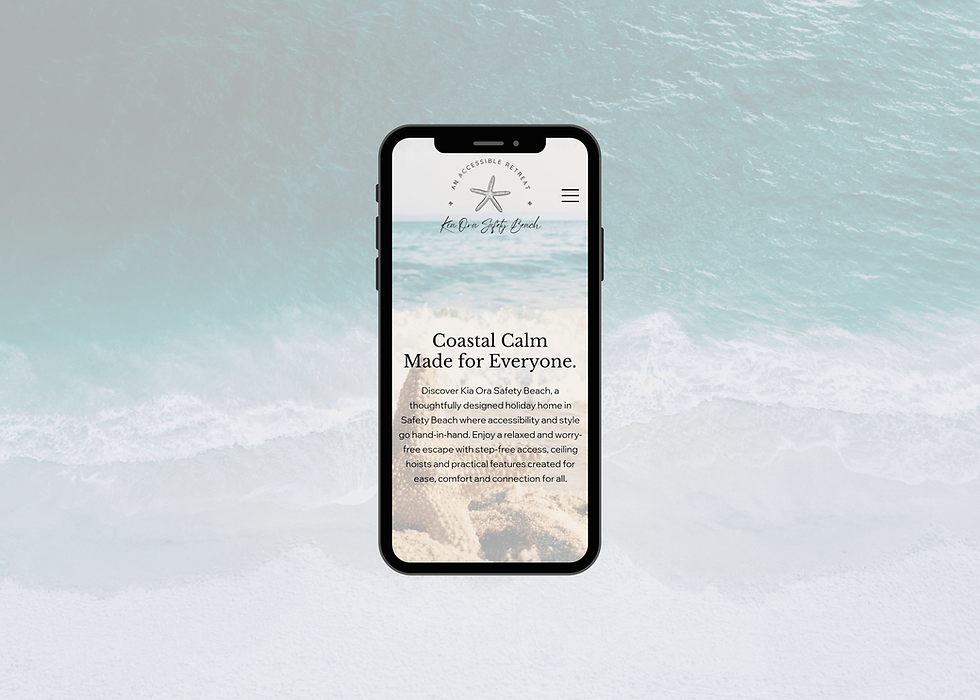
For instance, we recently undertook a project to update the website of a charming bed and breakfast located in the picturesque Mornington Peninsula. Our enhancements included comprehensive accessibility details, which were clearly highlighted, along with improved navigation that catered to users with diverse needs. Remarkably, just weeks after the launch of the revamped site, the bed and breakfast reported being fully booked.
Many guests specifically cited the accessibility features as a key reason for their booking choices. This case exemplifies how investing in an accessible website is not merely a good practice, but a decision that can yield a substantial return on investment, both in terms of financial gain and enhanced customer satisfaction.
Conclusion: The Importance of Accessibility in the Digital Age
Building an accessible website is a smart investment for Mornington Peninsula accommodation providers. It opens your doors to a wider audience, improves the booking experience, and strengthens your reputation. Start by focusing on user-friendly navigation, clear accessibility information, mobile responsiveness, and compliance with standards. These steps will help you create a website that truly welcomes every guest.
If you would like to learn more about getting a high-performance accessible website for your Mornington Peninsula Accommodation, get in touch with us today.


_edited.png)
Comments